What Was in the Bag: How One Family Turned a Worn-Out Backpack Into an Anchor
The Morning Nobody Talks About
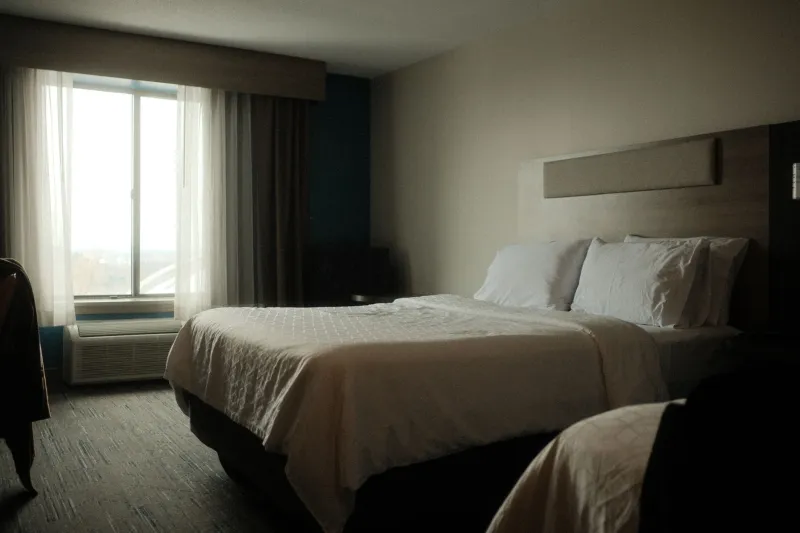
There's a version of the hospital morning that doesn't make it into the brochures. It's not the one where doctors deliver hopeful updates or nurses bring small kindnesses. It's the one that happens before all of that — when you wake up in an unfamiliar bed, stare at a ceiling you still haven't memorized after three weeks, and have to convince yourself to put your feet on the floor.
For Denise, a mom from Fayetteville, that moment came every single day for forty-one days while her eight-year-old daughter, Marisol, was being treated for a rare blood disorder at a children's hospital in Charlotte. And every single day, the thing that got her out of bed wasn't a pep talk or a prayer — though those helped too. It was a backpack.
"It sounds so small," she says now, laughing a little at herself. "But that bag was everything. Packing it was the first thing I did every morning, and unpacking it was the last thing I did every night. It was the only routine I had that was completely mine."
What Was Actually Inside
The backpack itself was nothing special. A navy blue Jansport she'd originally bought for her older son's school year. By the time Marisol was hospitalized, it had a fraying zipper and a faded logo. But what Denise put inside it evolved over the first week into something deliberate.
There was a small journal — not for deep reflective writing, she clarifies, but for lists. To-do lists, questions for doctors, names of nurses she wanted to remember. "Writing things down made me feel like I was holding the information instead of it holding me."
There was a pouch with her daughter's favorite chapstick, a tiny stuffed elephant that lived in the front pocket, and a deck of cards they played together during the slow afternoon hours. There was a phone charger, obviously, and a reusable water bottle she refilled obsessively because staying hydrated was one of the few things she could control. There was a small photo — just one, tucked into a zippered sleeve — of her whole family at the beach the previous summer.
"I didn't bring the whole photo album," she says. "Just that one. I could look at it without falling apart. It reminded me that we had a before, and that we'd have an after."
Why Routines Matter More Than We Think
What Denise was doing instinctively, researchers and therapists would recognize immediately. In high-stress, unpredictable environments — and a pediatric hospital ward is one of the most unpredictable environments a person can inhabit — small, repeated rituals serve a powerful psychological function. They create what psychologists sometimes call "islands of predictability." When the big things are out of your hands, controlling the small things restores a sense of agency.
For hospital parents, that need is acute. You don't control the diagnosis. You don't control the treatment timeline. You don't control whether today is a good day or a day that cracks you open. But you can control whether the chapstick is in the front pocket or the back. You can control what time you pack the bag and in what order. You can control the ritual.
"It was almost like a ceremony," Denise reflects. "Packing it at night meant the day was done. Unpacking it in the morning meant a new day was starting. It gave the time a shape when everything else felt shapeless."
The Space That Made the Ritual Possible
Denise and her husband Marcus stayed at the Ronald McDonald House near the hospital for most of Marisol's admission. And while she'd heard of RMHC before, she hadn't fully understood what it would mean to have that space until she was living in it.
"At the House, I had a room that was mine," she says. "I had a place to put the bag down. I had a kitchen where I could make coffee at 5:30 in the morning before anyone else was up, and that became part of the ritual too. Coffee, then pack the bag, then walk to the hospital."
That might sound like a small thing. But for families navigating a child's hospitalization, the difference between having a consistent, private space and not having one is enormous. Without a room at the Ronald McDonald House, Denise says she would have been living out of her car or a cramped hotel room an hour away. The morning ritual she built — the coffee, the bag, the quiet walk — would have been impossible.
"The House gave me somewhere to be a person before I had to go be a parent in crisis," she says. "Those thirty minutes in the morning, packing that bag, were mine. Nobody needed anything from me. I was just getting ready. That's it. And that mattered more than I can explain."
What Other Families Have Found
Denise's story isn't unusual. Across the families who've stayed at RMHC of NC, small rituals emerge constantly — a specific podcast played during the walk between the House and the hospital, a nightly FaceTime call with kids back home at exactly 7:45, a cup of herbal tea made in the shared kitchen before bed. These aren't coping mechanisms in the clinical sense. They're just the human impulse to find rhythm in the middle of noise.
Some families bring objects from home specifically to anchor themselves — a familiar mug, a particular blanket, a child's drawing taped to the wall of their room. Others build rituals around the shared spaces at the House itself: a regular seat in the family room, a favorite spot on the porch, a Tuesday-night dinner with a family they've come to know over weeks of parallel crisis.
The Ronald McDonald House doesn't manufacture these moments. It just makes room for them. Literally.
The Bag Comes Home
Marisol was discharged on a Tuesday afternoon in March. Denise packed the backpack one last time that morning — journal, chapstick, elephant, cards, water bottle, photo — and carried it out of the hospital for the last time.
She hasn't repacked it since. It sits on a shelf in her bedroom now, still a little frayed, zipper still a little stubborn. She's not sure she'll ever use it for anything else.
"It did its job," she says. "It held us together when I didn't know how to do that myself."
For families facing a child's hospitalization, that's the quiet truth nobody prepares you for: survival doesn't always look heroic. Sometimes it looks like a worn-out backpack, packed the same way every single morning, carrying the small things that remind you who you are and where you're going.
And sometimes, having a place to put it down at the end of the day — a room, a bed, a space that's yours — is what makes all the difference.