When the Music Played, Everything Else Got a Little Quieter
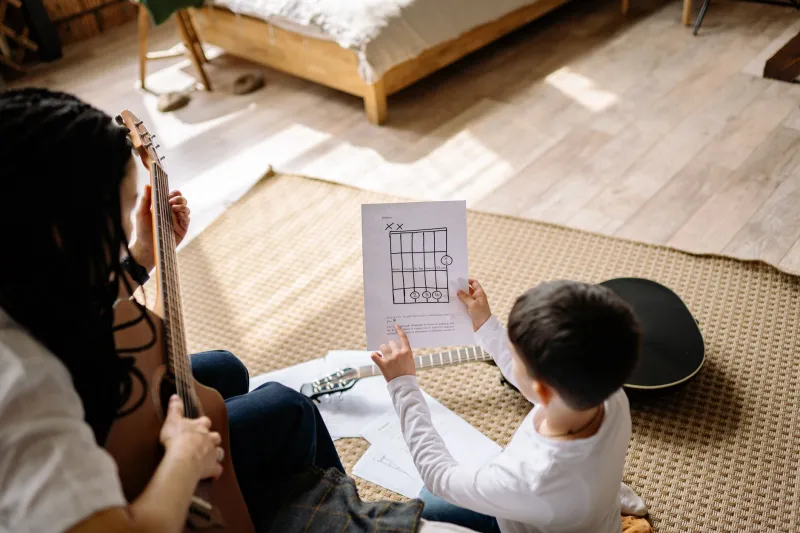
Nobody hands you a manual when your child gets admitted to the pediatric intensive care unit. You figure out the rhythms of the place — when the shift changes happen, which nurses let you stay through procedures, how to read the monitors without spiraling. And somewhere in the middle of all that, if you're lucky, someone walks in carrying a guitar.
For families staying close to hospitals through Ronald McDonald House Charities of NC, music therapy has quietly become one of the most talked-about tools in the coping toolkit. Not because it's flashy. Not because it fixes anything. But because in a place that can feel relentlessly clinical, music is one of the few things that still feels human.
What Music Therapy Actually Is (And Isn't)
Let's clear something up right away. Music therapy isn't a hospital playlist someone queued up on Spotify. It's a board-certified clinical discipline — music therapists complete undergraduate and graduate training, then pass a national exam before they ever walk into a patient room. They're trained to use music intentionally: to reduce pain perception, manage anxiety, support communication, and help patients and families process what they're going through.
In pediatric settings specifically, music therapy can look like a lot of different things. Sometimes it's a therapist sitting with a child during a painful dressing change, using a familiar song to create a predictable rhythm that helps the child breathe through it. Sometimes it's helping a nonverbal child communicate through simple instruments. Sometimes it's just sitting with a parent who hasn't cried yet and letting a song do what conversation couldn't.
The American Music Therapy Association notes that music therapy in medical settings is associated with reduced anxiety, lower pain scores, decreased need for sedation during certain procedures, and improved overall patient experience. For pediatric patients especially, the research is compelling — kids respond to music in ways that are sometimes faster and more reliable than other interventions.
A Parent's Perspective: The Moment It Clicked
Jamila, whose son spent nearly six weeks in the PICU at a children's hospital in Charlotte, remembers the first time a music therapist came to their room. Her son was four years old, post-surgery, and terrified of anything that involved the nurses getting close to him.
"He would scream the second he saw anyone in scrubs," she said. "I was holding it together for him, but I was falling apart inside."
The music therapist brought a small drum and a ukulele. She didn't make a big production of it — she just started playing softly near the doorway, not even in the room yet. Jamila's son stopped crying. Looked up. By the end of the session, he was tapping the drum himself while the nurse changed his IV dressing.
"I cried the whole time," Jamila said. "Not because I was sad. Because for five minutes, he was just a kid again."
That's the thing families come back to again and again: music therapy gives children — and parents — permission to step outside the role of patient and caregiver for a moment. It creates a pocket of normalcy in a place where normal feels very far away.
The Science Behind Why It Works
Music engages the brain differently than almost any other stimulus. Neurological research shows that listening to music activates multiple regions simultaneously — areas responsible for emotion, memory, movement, and reward. For children in pain or distress, this broad activation can actually compete with and reduce the brain's processing of pain signals.
There's also the rhythm factor. A steady, predictable beat can help regulate breathing and heart rate — both of which tend to spike during medical procedures or moments of high anxiety. Music therapists are trained to use a technique called "entrainment," where they gradually slow the tempo of what they're playing to guide a patient's physiological response toward calm.
For parents, the benefits are just as real. Chronic stress in caregiving situations suppresses immune function, disrupts sleep, and increases rates of depression and anxiety. Music has been shown to lower cortisol levels — the body's primary stress hormone — and increase dopamine, even in brief listening sessions. In other words, that five-minute guitar interlude isn't just nice. It's doing something measurable to your nervous system.
Practical Ways to Bring Music Into Your Hospital Stay
Not every hospital has a dedicated music therapy program, though that's changing. If yours does, ask your care team how to request a session — many families don't know it's available until someone mentions it in passing. Don't wait for it to come to you.
If formal music therapy isn't an option, there are still meaningful ways to use music intentionally:
Build a procedure playlist. Work with your child to pick three to five songs they love — songs that feel safe and familiar. Use these specifically during difficult moments like IV placements or wound care. Consistency matters; the familiar song becomes a signal that they can get through it.
Use music to mark time. Hospital days can blur together. Designating a morning song and a bedtime song gives the day shape and signals transitions, which helps children (and parents) feel less like time is just dissolving.
Let your child lead. Even very young children have musical preferences. Letting them choose what plays — or pick an instrument to tap — gives them a sense of control in an environment that offers very little of it.
Don't underestimate silence-breaking. Sometimes the hardest part of a hospital room is the ambient noise: beeping monitors, PA announcements, hallway conversations. Soft music through earbuds or a small portable speaker can create a buffer that makes the space feel more like yours.
Bring music from home. A song your family dances to in the kitchen. The lullaby you've sung since they were born. Familiar music carries context and memory in a way that generic calming playlists can't replicate.
For the Parents in the Waiting Room
Here's something worth saying plainly: music therapy isn't just for the child in the bed. Parents in the PICU are living in sustained crisis. The adrenaline doesn't turn off. The guilt doesn't quiet down. And the waiting — the relentless, crushing waiting — takes a toll that most people around you won't fully understand.
If a music therapist offers to play for you, let them. If you've got earbuds and a song that used to make you feel like yourself, put it on. You are not being frivolous. You are not ignoring your child's needs. You are doing something that science backs up: you're giving your nervous system a moment to reset so you can keep going.
At Ronald McDonald House Charities of NC, we see what families carry when they walk through our doors. The exhaustion is real. The fear is real. And so is the relief that comes from small, human things — a meal that someone else cooked, a bed that isn't a waiting room chair, and sometimes, a song that reminds you that you're still in there, somewhere, underneath all of it.
Music won't fix a diagnosis. It won't speed up a recovery or answer the questions that keep you up at night. But it can make the next hour feel survivable. And sometimes, that's exactly enough.