You're Allowed to Sleep: Breaking the Guilt Cycle That's Burning Out Hospital Parents
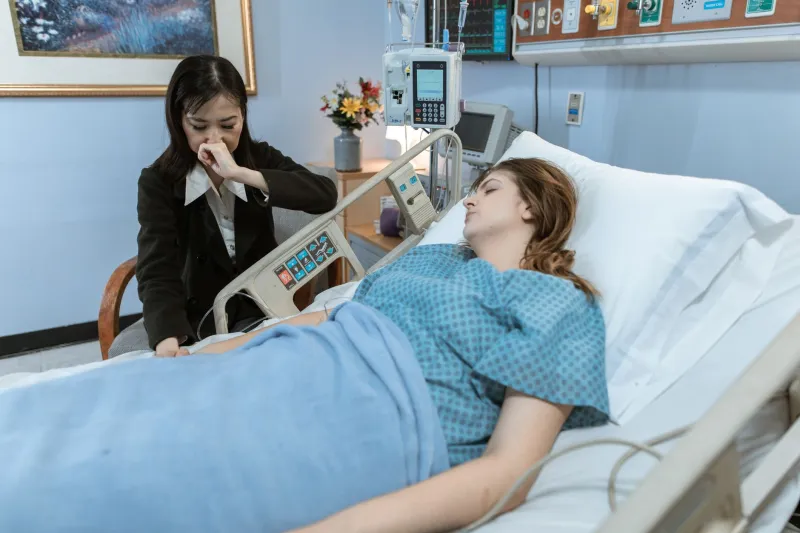
There's a particular kind of tired that doesn't show up on any medical chart. It lives behind the eyes of the parent who hasn't slept more than three hours at a stretch in two weeks. It settles into the shoulders of the mom who keeps refreshing the hospital's patient portal at 2 a.m. even when she knows nothing has changed. It's the exhaustion of loving someone so fiercely that you've quietly stopped taking care of yourself — and convinced yourself that's the right thing to do.
For families staying at Ronald McDonald House Charities of NC, this kind of bone-deep fatigue is something staff and volunteers recognize immediately. It walks through the front door wearing a brave face. And one of the most important things RMHC of NC quietly does — beyond providing a bed and a hot meal — is give parents a place where they're gently, persistently encouraged to rest.
But first, someone has to give them permission.
Why Guilt Is the Enemy of Recovery
Ask almost any parent who's spent significant time at a children's hospital what stops them from sleeping, and you'll hear a version of the same answer: It feels wrong.
Wrong to be comfortable when your child is hooked up to monitors. Wrong to laugh at dinner when there's a diagnosis hanging over your family. Wrong to close your eyes and actually fall into deep sleep when your kid might need you.
This guilt isn't irrational — it comes from a real and powerful place. Parental instinct doesn't have an off switch. But what the research tells us, and what experienced RMHC of NC staff will say plainly, is that running yourself into the ground doesn't make you a better advocate for your child. It makes you a slower thinker, a more reactive decision-maker, and a less present parent when presence matters most.
Caregiver burnout is a clinical reality. Chronic sleep deprivation impairs memory, emotional regulation, and immune function — the very things parents need most during a medical crisis. And yet the cultural message many of us absorbed somewhere along the way is that suffering alongside your child is proof of devotion.
It isn't. It's just suffering.
What Parents Have Said About Their Turning Points
Many families who've stayed at RMHC of NC describe a moment — sometimes weeks into a hospital stay — when something shifted.
For one mom from rural eastern North Carolina, it was a volunteer who handed her a cup of coffee and said, without fanfare: "When did you last sleep more than four hours?" She couldn't remember. The volunteer didn't lecture her. She just pointed toward the room down the hall and said the team would call if anything changed.
"I cried the whole way there," the mom later recalled. "And then I slept for six hours straight, and when I woke up, I felt like I could actually think again. I felt like a person."
For a dad who drove two hours from his home in the Piedmont every few days to be with his son during chemotherapy, the turning point came when his wife finally said out loud what neither of them had acknowledged: they were both running on empty, and their other kids at home could feel it.
"We started taking turns actually resting at the House. Like, real rest — not just sitting in a different chair," he said. "It changed everything about how we were showing up for each other and for him."
These aren't unusual stories. They're almost universal among long-term hospital families. The turning point almost always involves someone else giving them explicit permission to stop — even briefly — and a safe, comfortable place to actually do it.
What Rest Without Guilt Actually Looks Like
Resting when your child is hospitalized doesn't mean abandoning them. It means building a sustainable rhythm that keeps you functional for the long haul. Here are some practical ways families at RMHC of NC have learned to do that:
Set a real sleep schedule and protect it. It sounds basic, but many hospital parents have no schedule at all — they sleep when they collapse. Working with your medical team to understand the timing of your child's care routines can help you identify predictable windows where you can genuinely step away.
Use the House as a real home base, not a waiting room. RMHC of NC's houses are designed with genuine comfort in mind — real kitchens, quiet common spaces, private rooms. They're not meant to be a place where you sit and stare at your phone. Cook something. Take a shower that lasts longer than three minutes. Sit outside. Let the space do what it was built to do.
Tag-team with your partner, family member, or trusted friend. You don't both need to be at the bedside at the same time, every time. Divide the hours intentionally. One person rests while the other stays close. Then switch. This isn't abandonment — it's logistics.
Tell the nursing staff you're stepping away. Most hospital nurses will actively encourage parents to rest, and they will call you if anything changes. Handing off that vigilance — even for a few hours — is not a failure of love. It's a practical handoff to trained professionals.
Name the guilt when it shows up. It will show up. Saying out loud, "I feel guilty for resting," can take some of its power away. Other parents at the House have felt it too. Talking about it in shared spaces has a way of normalizing something that should be normal.
How RMHC of NC Is Built for This
It's worth understanding that the design philosophy behind Ronald McDonald Houses isn't just about proximity to the hospital — it's about genuine recovery. The private rooms exist so parents can actually sleep without noise interruptions. The shared kitchens exist so families can eat real food and feel a sense of normalcy. The common areas exist so people can connect with others who understand what they're going through without having to explain it from scratch.
At RMHC of NC specifically, staff and volunteers are trained to notice when a family is struggling — not just with logistics, but with the invisible weight of sustained stress. They're not therapists, but they know how to offer a meal, a quiet conversation, or a simple acknowledgment that what a family is carrying is genuinely hard.
Sometimes that acknowledgment is exactly what breaks the guilt cycle open.
The Hardest Thing to Believe
If you're a parent in the middle of a child's hospitalization and you're reading this, here's the thing most worth sitting with: taking care of yourself is part of taking care of your child.
Not as a platitude. As a practical fact.
The parent who sleeps six hours is clearer in conversations with doctors. The parent who eats a real meal can hold space for their child's fear without immediately falling apart. The parent who stepped away for an afternoon comes back with something still left to give.
You're not a machine. You're a person in an extraordinarily hard situation, doing the best you can. And the best you can includes rest.
You're allowed. You always were.