How a Small NC Town Became the Safety Net One Family Never Knew They Needed
The morning Adaeze Okafor got the call, she was standing in the cereal aisle at a grocery store in Lenoir, NC. Her husband was already at work. Their older daughter was at school. And their five-year-old son, Emeka, was at the pediatrician's office with a babysitter — a routine checkup that turned into anything but.
By noon, Emeka had been airlifted to a children's hospital in Charlotte. By evening, Adaeze and her husband Chidi were in a waiting room two hundred miles from everything familiar, running low on sleep, cash, and any sense of what came next.
"We didn't have a plan for something like this," Adaeze said. "You don't. Nobody does."
What the Okafors did have — though they didn't fully realize it yet — was a community. And over the following three weeks, that community quietly assembled something extraordinary.
The First 48 Hours: When Chaos Meets Kindness
It started with a text from a neighbor. Then a post in a local Facebook group. Then a phone call from their church's family liaison, a woman named Brenda who had been through a similar experience with her own grandchild years earlier and never forgot how alone it felt.
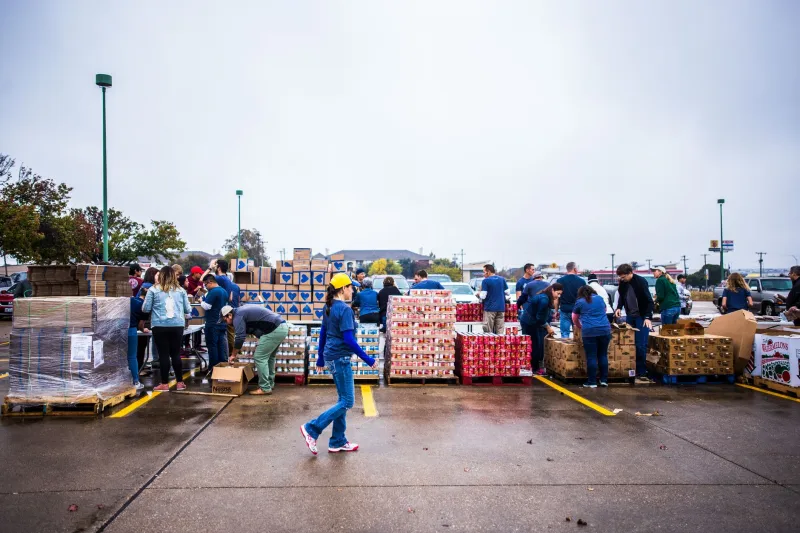
Within 48 hours of Emeka's hospitalization, a small group of seven people had formed what they called an informal "care team" — not an official organization, just neighbors and church members who decided to divide and conquer.
One person set up a meal train for the older daughter, who was staying with a relative. Another created a shared Google calendar for school pickups and drop-offs. A third opened a community fundraising page to help offset the cost of gas, lodging, and the daily expenses that stack up fast when a family is living out of a hospital waiting room.
"Nobody asked us what we needed," Adaeze recalled. "They just figured it out and told us what they were doing. That was actually the most helpful part — we were too overwhelmed to know what to ask for."
Why 'Let Me Know If You Need Anything' Doesn't Work
If you've ever been through a family crisis, you know the phrase well: Let me know if you need anything. It's kind. It's genuine. And it almost never leads to actual help — not because people don't mean it, but because families in crisis don't have the bandwidth to project-manage their own support system.
This is one of the most important lessons embedded in the Okafor story, and it's one that community organizers and social workers echo consistently: effective support is specific, proactive, and coordinated.
Brenda, who helped anchor the Lenoir care team, puts it plainly. "You have to take the decision-making off the family's plate. Don't ask. Just do — and then tell them what you did so they can say yes or no."
That philosophy drove every decision the group made. Meals were scheduled, not offered. Rides were confirmed, not floated. The fundraiser was launched, not suggested.
The Building Blocks of a Real Support Village
For communities wanting to replicate what happened in Lenoir, the structure doesn't have to be complicated. Here's what worked — and what other NC families and community groups can adapt.
One Point of Contact
The Okafor team designated a single coordinator — Brenda — as the family's primary liaison. This meant Adaeze and Chidi only had to communicate with one person, who then filtered information to the rest of the group. It sounds simple, but it's transformative. Families in medical crisis are often bombarded with well-meaning check-ins that become their own kind of exhaustion.
A Living Needs Document
The group maintained a shared Google Doc — accessible to all volunteers — that tracked current needs, what had been covered, and what was still open. Pet care, prescription pickups, mail collection, sibling transportation: it was all in one place, updated in real time.
A No-Expiration Support Window
One of the group's deliberate choices was to plan support through at least two weeks after discharge — not just during the hospitalization. "We knew from Brenda's experience that coming home is actually when a lot of families fall apart a little," said one volunteer. "We didn't want to disappear right when they got back."
Financial Coordination Without Awkwardness
Fundraising for families in crisis can feel uncomfortable — both to offer and to accept. The Lenoir group handled this by framing the fundraiser as community-driven rather than charity-driven. The page language focused on the whole family's resilience, not their hardship. It raised over $3,400 in ten days.
Where RMHC of NC Fits In
The Okafor family stayed at a Ronald McDonald House during Emeka's hospitalization — a resource they hadn't known about until a hospital social worker mentioned it. The ability to sleep in a real bed, share a meal with other families going through similar experiences, and not worry about hotel costs gave them a stability they couldn't have manufactured on their own.
"It was the one thing that felt solid," Chidi said. "Everything else was chaos. But that place felt like someone had thought about us."
RMHC of NC serves as exactly that kind of anchor — a hub that bridges the gap between hospital and home. But the organization also recognizes that no single institution can do it all. What the Lenoir community built around the Okafors is the kind of grassroots infrastructure that amplifies everything else — the Ronald McDonald House, the hospital social workers, the insurance navigators.
Community support doesn't replace professional resources. It surrounds them.
A Blueprint Anyone Can Use
Emeka came home after 22 days. He's doing well. And in Lenoir, the informal care team that formed around his family has since helped two other families navigate pediatric hospitalizations — because they'd already figured out how to do it.
That's the quiet power of what happened there. A crisis built a template. And a template, shared widely enough, becomes a safety net.
If you want to build something similar in your own community — or if your family is in the middle of a crisis and you need to know what resources exist — Ronald McDonald House Charities of NC is here to help connect the dots. Visit rmhcofnc.org to learn about our programs, find your nearest House, or explore how your community can partner with us to make sure no North Carolina family ever has to figure it out alone.
Because a home away from home isn't just a building. It's the whole village that shows up.