Same Bedtime, Different Zip Code: How Families Hold Onto Normal During the Hardest Days
When Everything Changes, Routine Can Be the One Thing That Doesn't
Imagine packing a bag for a trip you never planned to take. No destination in mind, no return date, just the knowledge that your child needs medical care — and that home, as you knew it, is temporarily on hold.
That's the reality for hundreds of families who come through the doors of Ronald McDonald House Charities of NC each year. Whether they're traveling from a small town in the Piedmont or driving up from the coast, these families arrive exhausted, scared, and desperate for something — anything — that feels familiar.
What many of them discover, sometimes by accident and sometimes by design, is that the answer isn't a specific place. It's a rhythm.
Why Routine Matters More Than You Might Think
Child psychologists have long understood that predictability is one of the most powerful tools for helping kids cope with stress. Dr. Laura Markham, a clinical psychologist and parenting expert, has written extensively about how consistent daily patterns help children regulate their emotions — especially during periods of fear or uncertainty.
"Children's nervous systems are wired to look for patterns," she explains in her work on childhood anxiety. "When a child knows what comes next, their brain can relax just enough to process what's happening around them."
For a child facing surgery, chemotherapy, or a long-term treatment plan, that kind of nervous system relief isn't just comforting — it's genuinely therapeutic. And for parents? Routine can serve as a quiet act of self-preservation.
"When you're living day to day in a hospital environment, you can lose yourself," says one mom who stayed at Ronald McDonald House in Chapel Hill for nearly three months while her daughter underwent cardiac treatment. "Having a structure — even a loose one — gave me something to hold onto. It reminded me that I was still a mom, not just a caregiver in crisis mode."
Real Rituals, Real Results
So what does routine actually look like when you're living in a Ronald McDonald House? The answers vary by family, but the themes are remarkably consistent.
Morning anchors. For many families, the day starts the same way it always did — or as close to it as possible. Some parents pack their child's favorite cereal or a special mug from home. Others keep the same wake-up playlist going on their phones. One dad from Raleigh described how he and his son started every morning with a five-minute joke session, something they'd done since kindergarten. "It sounds silly, but it told him: we're still us. This is still our life."
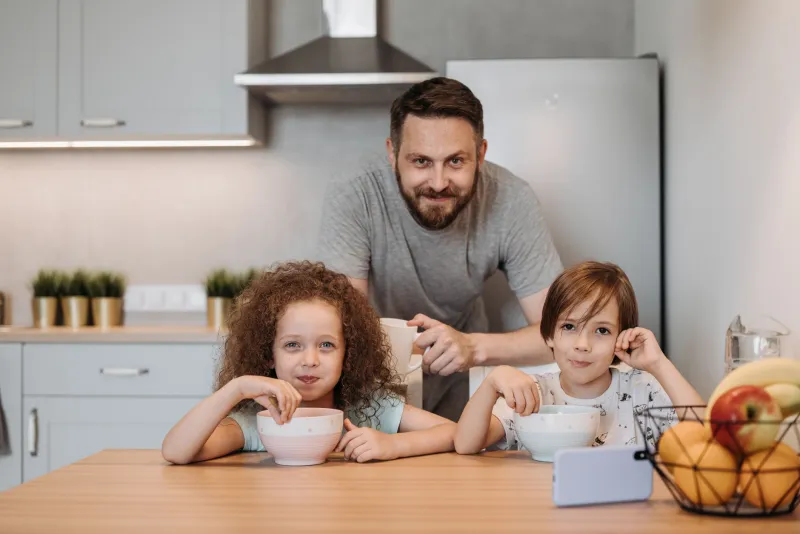
Mealtimes as connection points. The shared kitchen at Ronald McDonald House becomes something of a community hub, and families often use mealtimes as intentional gathering points. Sitting down together — away from the hospital room, away from beeping monitors — creates a mental boundary between the medical world and family life. Even a simple meal of pasta and garlic bread can feel like a reset button.
Bedtime rituals that travel well. Parents consistently report that bedtime routines are among the most important to preserve. Bedtime stories, prayer, a specific stuffed animal, a particular lullaby — these are portable traditions that cost nothing and mean everything. Child life specialists at pediatric hospitals across NC often encourage families to keep these rituals intact, noting that a familiar bedtime sequence can help hospitalized children sleep more soundly and feel safer in unfamiliar environments.
Homework and learning time. For school-age kids, keeping up with schoolwork — even in small doses — provides structure and a sense of forward momentum. Ronald McDonald House of NC connects families with resources to support continued learning during extended stays, helping children feel like they're still moving toward something, not just waiting.
The Parent Piece Nobody Talks About
It's easy to focus all the attention on the child who is sick. But parents are quietly falling apart too, often in ways they don't feel they have permission to acknowledge.
Routine helps here in a specific way: it gives parents micro-moments of agency in a situation where so much is out of their hands. Choosing to make a cup of tea at the same time every afternoon, or taking a ten-minute walk around the block before heading back to the hospital — these small acts of self-determination matter more than they seem.
"I started doing a quick yoga video in our room every morning at 7 a.m.," says a mom whose son spent six weeks at a children's hospital while staying at Ronald McDonald House. "It was twenty minutes. But it was mine. And it helped me show up for him better every single day."
RMHC of NC's staff and volunteers often play a quiet but meaningful role in supporting these parental rituals — whether that's keeping the coffee fresh, offering a warm meal, or simply checking in with a smile that says we see you.
Building Your Portable Routine: A Few Practical Starting Points
If your family is facing a hospitalization or extended medical stay, here are a few ways to start building structure that can travel with you:
- Identify your non-negotiables. Pick two or three daily rituals that matter most to your child and commit to keeping them. They don't have to be elaborate — consistency is the point.
- Use familiar objects as anchors. A favorite blanket, a family photo, a playlist, or a beloved book can help make any space feel a little more like home.
- Loop in the hospital's child life team. Child life specialists are trained to help families maintain normalcy during hospital stays. They're an underused resource — ask for them by name.
- Give yourself grace on the hard days. Some days, routine falls apart entirely. That's okay. The goal isn't perfection; it's intention.
Home Is a Feeling, Not an Address
At Ronald McDonald House Charities of NC, the whole mission is built around a simple but radical idea: families shouldn't have to choose between being together and getting the best care for their child. A place to sleep, a hot meal, a community of people who understand — these things matter enormously.
But what families often discover is that the most powerful thing they brought with them wasn't packed in a suitcase. It was the way they said goodnight. The jokes they told over breakfast. The small, stubborn rituals that said: we are still a family, and we are still okay.
That's the healing power of routine. And it's available to every family, no matter how long the road ahead looks.