The Forgotten Ones: How RMHC of NC Makes Sure Siblings Don't Get Left Behind
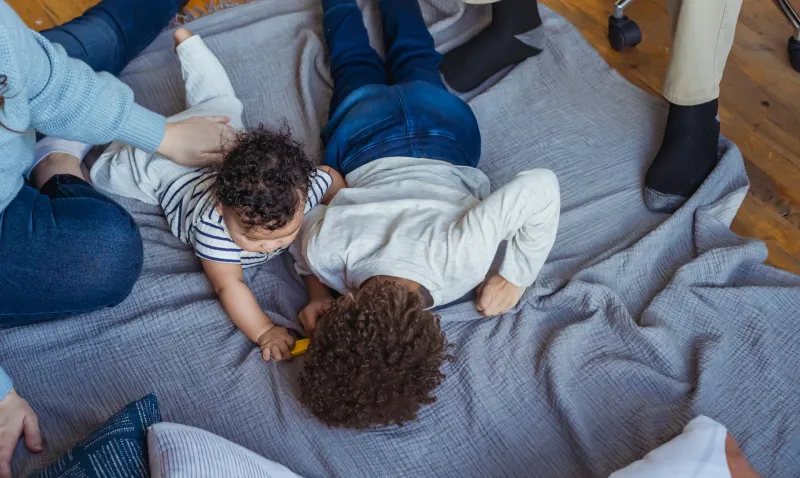
There's a moment that a lot of parents describe — a gut-punch kind of moment — when they realize their healthy child has been struggling in silence.
Maybe it's the school counselor calling to say their eight-year-old has been acting out. Maybe it's finding their teenager curled up in a sibling's empty bedroom, holding a stuffed animal. Maybe it's the quiet way a five-year-old stops asking when their brother is coming home.
When a child is hospitalized for a serious illness or injury, the entire family reorganizes itself around that child — and rightfully so. But in that necessary reshuffling, brothers and sisters can find themselves adrift. They're not sick. They're not the ones who need the doctors. And yet they're losing something too: their family's normal rhythms, their parents' undivided attention, and sometimes even their own sense of safety in the world.
At Ronald McDonald House Charities of NC, we think about siblings a lot. Because keeping families together isn't just about the child in the hospital bed — it's about every child who belongs to that family.
What Siblings Are Actually Going Through
Child psychologists have a term for what healthy siblings often experience during a brother or sister's serious illness: "sibling stress syndrome." It's not a formal diagnosis, but it captures something very real.
Siblings of hospitalized children frequently report feelings of:
- Guilt — even when they've done nothing wrong. Younger children especially tend toward magical thinking, wondering if something they said or did caused their sibling's illness.
- Jealousy — and then guilt about the jealousy. It's deeply uncomfortable to feel resentful of a sick brother or sister, and kids often don't have the emotional vocabulary to process that conflict.
- Fear — not just for their sibling, but for themselves. If it happened to my brother, could it happen to me?
- Loneliness and invisibility — when parents are physically and emotionally consumed by hospital life, siblings can feel like they've lost both a sibling and their parents at the same time.
- Academic struggles — concentration is hard when home life is in chaos. Teachers may not know what's going on, which makes it harder to get appropriate support.
None of these feelings make a child bad or selfish. They make them human. And they deserve to be acknowledged.
A Story from a North Carolina Family
The Martinez family from Greensboro spent nearly three months at our Ronald McDonald House in Chapel Hill while their youngest daughter, Sofia, underwent treatment for leukemia. Their older son, Marco, was eleven at the time — old enough to understand what was happening, young enough to be completely overwhelmed by it.
"Marco was a trooper on the outside," his mother, Daniela, recalls. "He went to school, he did his homework, he didn't complain. But he started having nightmares, and his teacher told us he'd stopped talking to his friends at lunch."
When Marco came to stay at the Ronald McDonald House on weekends, something shifted. He wasn't just a visitor in a medical world anymore — he was part of the family's space. He had a bed. He had people his own age around him. Staff and volunteers made a point of asking him how he was doing, not just asking about Sofia.
"One of the volunteers used to play cards with him after dinner," Daniela says. "It sounds small, but for Marco, it was huge. Someone was paying attention to him."
Sofia is now in remission. Marco, his mom says, talks openly about that period of his life — something she credits partly to the environment at the House, where kids are allowed to just be kids.
How RMHC of NC Specifically Supports Siblings
Our Ronald McDonald Houses in North Carolina aren't just places to sleep. They're designed to feel like a home — which means they're designed for whole families, not just parents and the child receiving treatment.
Here's how our programs intentionally create space for siblings:
Siblings are welcome. This might sound obvious, but it matters. Brothers and sisters aren't an afterthought at our Houses — they're part of the family unit we're committed to supporting. When parents can bring siblings to stay on weekends or school breaks, the family stays intact rather than splitting across two different worlds.
Common spaces designed for kids of all ages. Our Houses have play areas, game rooms, and outdoor spaces where siblings can decompress, play, and just be kids. When a child's entire life has been reorganized around a hospital schedule, having a place that's genuinely fun matters.
Intentional community. Families at our Houses are going through similar experiences. Siblings often find unexpected comfort in meeting other kids who understand — who don't need an explanation for why their parent isn't home, because their parent isn't fully home either.
Volunteer engagement. Our volunteers are trained to engage with the whole family. That means noticing when a sibling seems withdrawn, making conversation, and creating moments of normalcy.
Connection to additional resources. Our staff can connect families with child therapists, school support contacts, and community programs designed specifically for siblings of seriously ill children — including organizations like Sibling Support Project and local hospital-based sibling programs.
What Parents Can Do Right Now
If you're in the middle of a child's hospitalization and you're reading this with a knot in your stomach because you recognize your healthy kid in some of what's described above — first, take a breath. The fact that you're thinking about this means you're already a step ahead.
Here are some concrete things that help:
Name what's happening. Don't try to shield siblings from the situation entirely. Age-appropriate honesty — "Your sister is very sick and the doctors are working hard to help her" — is almost always better than vague reassurances that kids can sense are incomplete.
Carve out dedicated one-on-one time. Even fifteen minutes of truly focused attention — a phone call just to chat, a video game played together, a drive to get ice cream — tells a sibling they still matter.
Loop in their school. A quick email to a teacher or school counselor explaining the situation can open the door to extra support and a more understanding environment.
Let them feel whatever they feel. If your healthy child is angry, let them be angry. If they're sad, sit with the sadness. The goal isn't to fix the feelings — it's to make sure they know their feelings are allowed.
Give them a role. Older siblings especially can benefit from having something meaningful to contribute — making a card, helping pack a bag for the hospital visit, being the one who feeds the dog. Purpose is a powerful antidote to helplessness.
Consider a sibling support group. Many children's hospitals and community organizations offer groups specifically for kids who have a brother or sister dealing with illness. Hearing "me too" from another child is uniquely powerful.
Every Member of This Family Matters
At RMHC of NC, our tagline — a home away from home — is something we take seriously in the fullest sense of the word. Home isn't just one person. It's everyone who belongs to each other.
Siblings of hospitalized children are brave in a quiet, often unrecognized way. They're holding things together at school, managing their own fear, and missing people they love. They deserve to be seen.
If your family is currently navigating a hospitalization and you'd like to learn more about how RMHC of NC can support everyone under your roof — including the kids at home — visit us at rmhcofnc.org or reach out directly. We're here for all of them.