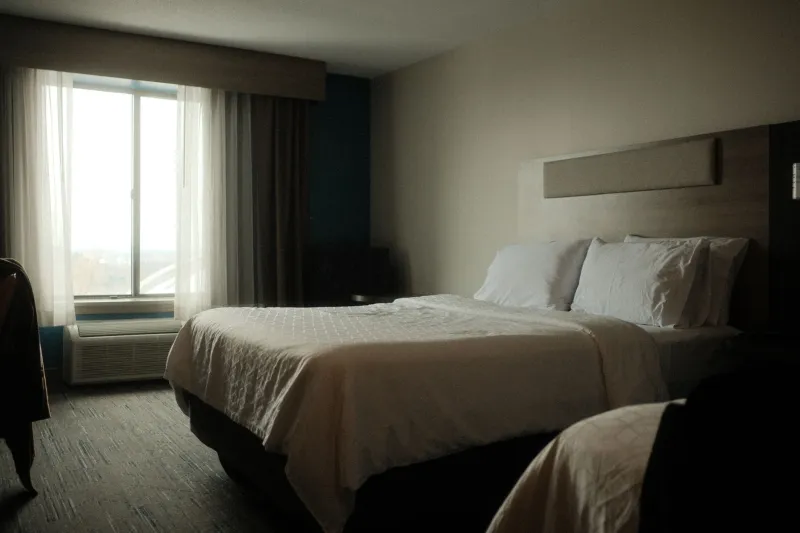
Pages Nobody Asked For: How Hospital Parents Are Quietly Documenting the Unfiltered Truth
The Notebook That Showed Up Uninvited
Some parents bring a journal on purpose. Others find themselves scribbling on the back of a hospital menu, a cafeteria receipt, the corner of a discharge summary. The impulse to write something down — anything — often arrives before you've even consciously decided to document your experience.
There's a reason for that. When your child is hospitalized, your brain is doing an almost impossible amount of work. It's tracking medications and monitoring numbers, processing conversations with doctors, managing fear, managing hope, managing the completely ordinary guilt of forgetting to eat lunch. Writing things down isn't just memory preservation. It's pressure relief.
At Ronald McDonald House Charities of NC, we've watched countless families arrive carrying almost nothing and leave with notebooks full of things they never expected to write. What goes in those pages tells you a lot about what it means to be a parent in crisis — and what it means to keep going anyway.
What People Actually Record
If you imagine a hospital parent's journal as a medical log, you're only seeing part of the picture. Yes, plenty of families track vitals, medication schedules, and doctor names. That practical documentation is genuinely useful — and anyone who's tried to remember whether the attending physician said "possible" or "probable" at 2 a.m. knows why.
But the other stuff? That's where it gets real.
Parents write down what their kid said when they woke up from a procedure. They write down the nurse's name who made their daughter laugh. They write down their own anger, their confusion, the conversation with their spouse that went sideways in the family lounge. Some parents record voice memos in the parking garage because they don't want to cry in front of anyone but can't hold it in anymore. Some take photos of the hospital window view — the same view, every morning — because something about having proof that time is actually passing makes the days feel less like they're stacking up endlessly.
One mom described filling an entire notebook during her son's six-week stay, then never opening it again after they got home. "I don't need to read it," she said. "I just needed to put it somewhere outside my body."
That's not unusual. The act of recording can matter more than the record itself.
The Question Nobody Thinks to Ask: What's Worth Keeping?
Here's the tension that sits underneath all of this: when everything feels enormous, how do you decide what deserves to be preserved?
Some moments feel too painful to write down. Some feel too small. Some feel like they belong only to you, or only to your child, or only to the specific terrible-beautiful hour in which they happened. There's no rulebook for this, and the pressure to "capture everything" can become its own kind of burden.
A few things that actually help parents navigate this:
Write for your future self, not an audience. You don't owe anyone a coherent narrative. You don't have to explain the context or make it readable. Short fragments, half-sentences, a single word that meant something — all of it counts.
Let go of chronology. Hospital time doesn't work the way regular time does. Trying to maintain a clean, dated record can feel like one more thing to manage. Write what's in front of you. The sequence can sort itself out later, or not at all.
Photos are documentation too. You don't have to caption them. You don't have to post them. A photo of your child's hand, or your own exhausted face in the bathroom mirror, or the view from the window seat you claimed as your territory — these are records of a real experience, and they're yours.
Voice memos are underrated. If writing feels like too much, talking to your phone requires almost nothing. You can do it in the elevator. You can do it in ten seconds. Some parents describe listening back months later and barely recognizing their own voice — and finding that strangely clarifying.
When Documentation Becomes a Lifeline
For some families, the notebook evolves into something they didn't expect: a way to communicate with people outside the hospital who don't know what to say. A few sentences texted to a sibling. A photo shared with a grandparent who lives far away. A CaringBridge update that took twenty minutes to write and somehow said more than a dozen phone calls could have.
Documentation, in this sense, becomes a bridge. It lets people in without requiring you to perform okayness in real time. You can write it at midnight when you're clear-headed and scared and honest, and it can reach someone who loves you in the morning when they're ready to receive it.
That's a form of connection that hospital parents often don't get enough of — the kind that doesn't demand anything back.
The Stuff You'll Be Glad You Saved
Here's what parents consistently say, looking back: they don't regret writing too much. They sometimes regret writing too little, or stopping when things got hard, or talking themselves out of recording a moment because it felt trivial.
The drawing your kid made with a half-dried marker on a napkin. The card the child life specialist left on the bed. The stupid joke your spouse told at the worst possible moment that made you both lose it laughing. The timestamp on a text that says "results came back." These things don't feel significant in the moment. They become significant later — sometimes much later.
You don't have to be a writer. You don't have to be organized. You don't have to be doing it "right." You just have to be willing to put something on the page, or into your phone, or into the back of an envelope.
At RMHC of NC, we believe that families going through the hardest seasons of their lives deserve every tool available to help them hold on — to their memories, to their sense of self, to each other. Sometimes that tool is a notebook. Sometimes it's a voice memo recorded in a parking garage at 11 p.m.
All of it counts. Every word of it.