What Nobody Tells You When You Walk Through Those Hospital Doors for the First Time
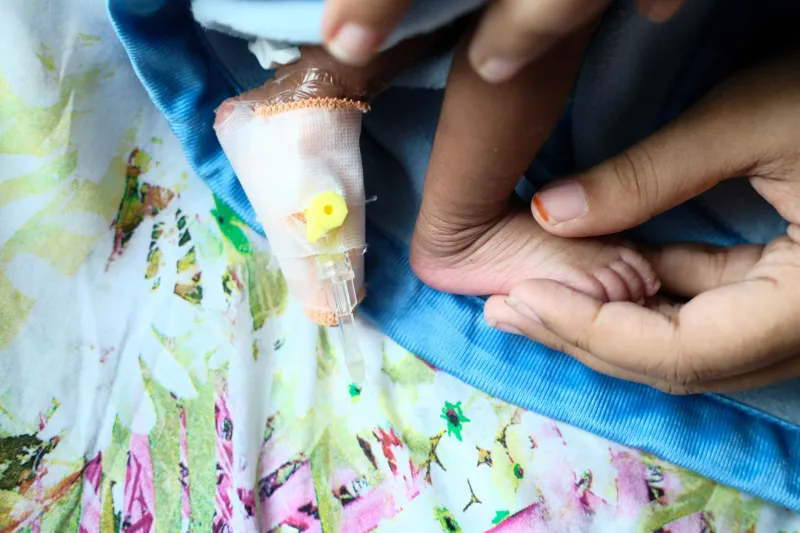
The Moment Everything Changes
One minute you're packing lunches and arguing about screen time. The next, you're standing at a hospital admissions desk, signing papers you can barely read because your hands won't stop shaking. Nothing prepares you for that first day — not Google, not parenting books, not even the well-meaning friends who've texted you a dozen times already.
But here's what's true: thousands of families have walked those same hallways before you. They figured things out the hard way, through exhaustion and trial and error. And if you ask them — really ask them — they'll tell you the same things, over and over. This is that conversation.
The Unspoken Rules of Hospital Life
Every hospital has its official policies. Then there's everything else — the social code that nobody prints in a brochure.
Learn your nurse's name on day one. Not just to be polite. Your child's nurse is the person who will notice the subtle changes, flag concerns to the attending physician, and make your child feel safe during the scariest procedures. A genuine relationship with your care team — built on respect, not desperation — changes the quality of your experience in ways that are hard to quantify but impossible to miss.
Don't be the last parent to ask a question. Hospital culture can feel intimidating. Rounds happen fast. Doctors speak in shorthand. You might feel like you're slowing everyone down. You're not. Parents who've been through long hospitalizations say the same thing: write your questions down the night before, and ask every single one during rounds. If you don't understand the answer, say so. "Can you explain that in plain language?" is a sentence that has never offended a good doctor.
The shift change is not the time for updates. Most hospitals have shift changes twice a day, and that's when nurses are handing off patient information to each other. Experienced hospital parents know to hold non-urgent questions for after the transition settles — usually 30 to 45 minutes in. It's a small thing that makes a big difference in the relationship you build with your team.
Advocating Without Burning Bridges
Advocating for your child is your job. Full stop. But there's a version of advocacy that works and a version that leaves you isolated from the very people you need most.
The parents who navigate this best tend to operate from a simple principle: assume good intent until you have clear evidence otherwise. Medical teams are overworked, under-resourced, and doing their best. Coming in hot on day one — even when you're scared and angry, which you have every right to be — can create friction that's hard to undo.
That said, if something feels wrong, say something. If you notice a change in your child that the team hasn't acknowledged, press for an answer. If a plan doesn't make sense to you, ask for a family meeting. You are not a bystander in your child's care. The medical team needs what you know about your child — their baseline behavior, their pain tolerance, the way they act when something is really off — and that information only comes from you.
One mom who spent four months at a children's hospital in Charlotte put it this way: "I stopped thinking of myself as fighting the hospital and started thinking of myself as part of the team. That shift in my head changed everything about how I showed up in that room."
The Emotional Whiplash Nobody Warns You About
Good news on Tuesday. A setback on Thursday. Hope, then fear, then a strange kind of numb that settles in somewhere around week two.
This is the emotional reality of pediatric hospitalization, and it is genuinely disorienting. Parents describe it as a rollercoaster — except it's not thrilling, and you can't get off.
A few things that actually help:
- Don't make major decisions on bad days. When you're in the valley of a setback, your brain is not giving you accurate information about the future. Give yourself a 24-hour rule before making any significant choices.
- Find one person who can hold the updates. Fielding texts and calls from extended family while you're trying to be present at your child's bedside is exhausting. Designate one person — a sibling, a close friend — to be the family communicator. Let them handle the updates so you can focus on your child.
- Let yourself have five minutes. Some parents feel guilty stepping away from the bedside to cry in a bathroom stall, eat a real meal, or just sit in silence. Those five minutes are not abandonment. They are survival. You cannot pour from an empty cup, and your child needs you to still be standing next week.
The Resources That Exist (That Nobody Tells You About)
This one matters. A lot.
Hospitals have social workers on staff, and most families don't know to ask for one until they're already in crisis. A pediatric social worker can connect you with financial assistance programs, help you navigate insurance disputes, identify community resources, and sometimes just be the person who sits with you when the weight of everything gets to be too much. Ask for a social worker on day one. Don't wait.
Child Life Specialists are another resource that often goes untapped. These are trained professionals whose entire job is to help children (and their families) cope with the emotional and psychological side of hospitalization. They can prepare your child for procedures, provide therapeutic play, and offer coping tools that make a real difference in how your child experiences their stay.
And then there's the Ronald McDonald House.
For families who live far from the hospital — or who simply can't afford to keep paying for hotels and restaurant meals while their child is being treated — RMHC of NC provides a place to stay that is warm, fully equipped, and free or low-cost. Hot meals. A real bed. Laundry facilities. A place where you can actually exhale. Many families don't know this resource exists until they've already spent weeks sleeping in waiting room chairs. Ask your social worker about it. Ask the nurses. Ask the family down the hall who looks like they've been there longer than you.
You Are Not Starting From Zero
Here's the thing about that first day: it feels like the loneliest moment of your life. And in some ways, it is. But the parents who've been where you are — who've sat in the same chairs, stared at the same ceiling tiles, and had the same 3 a.m. fears — they are not so far away.
In the hallways of a children's hospital, in the common rooms of a Ronald McDonald House, in the quiet nods exchanged between parents who don't need to explain themselves to each other — there is a community waiting for you.
You don't have to figure this out alone. You just have to know where to look.